Start my assessment

Project and portfolio management: from backlog to trade-off.

Running a project portfolio first requires projects that can genuinely be run. BleuLemon supports organisations from the day-to-day management of backlogs, teams, workload and dependencies through to portfolio governance and capacity trade-offs. We structure the practices, processes and tooling that produce reliable information at every level: team, project, programme and portfolio.

Priorities settled, capacity under control. · Atlassian Platinum Solution Partner since 2008 · IBM Silver Partner · Paris and Lyon

A reliable portfolio starts with well-run projects.

Portfolio management does not start at the executive committee. It starts in the teams: in the backlogs, the priorities, the estimates, who is assigned to what, the dependencies and the regular updating of progress.

If the operational data is not reliable, the portfolio view cannot be either. We work at every level of management.

01
Structuring and managing backlogs

Defining and implementing workflows, statuses, business rules and prioritisation methods.

02
Organising teams and their capacity

Structuring teams, identifying the skills available and making genuinely usable capacity visible.

03
Priority management

Putting shared prioritisation rules in place to order requests, work and projects.

04
Project and programme planning

Building workload plans, milestones, roadmaps and planning scenarios at project and programme level.

05
Dependency tracking

Identifying and tracking dependencies between teams, projects and programmes in order to anticipate blockages.

06
Workload consolidation

Aggregating workload and capacity to give a consistent view of the resources committed and available.

07
Portfolio governance

Defining the bodies, roles, responsibilities and decision cycles needed to run the portfolio.

08
Trade-off criteria

Defining explicit criteria to compare, prioritise, defer or stop initiatives.

09
Budget management where needed

Connecting budgets, investments and priorities so that the financial dimension is part of the trade-offs.

10
Dashboards and decision views

Building views suited to teams, PMOs and decision-makers to steer activity and prepare trade-offs.

Managing projects and managing portfolios: two different, complementary activities.

Project management is about making each initiative succeed. Portfolio management is about making the right choices between all the initiatives. It allows priorities, resources, dependencies and budgets to be traded off across the organisation.

What sets them apartProject managementPortfolio management
Question addressedIs the project progressing as planned?Which projects deserve the available capacity?
PurposeBacklog, schedule, team, deliverable, risksAll programmes and projects
Data requiredWorkload, progress, dependenciesConsolidated capacity, value delivered, costs, priorities between initiatives
DecisionsPrioritise the work, secure the deliveryStart, defer, accelerate or stop
ResponsibilityProject manager, Product Owner, TeamsExecutive team, Portfolio committee, PMO

The two levels are inseparable: a portfolio can only be properly run if the data coming from the projects is reliable enough.

The committee in session, roadmap on screen
The presentation in session, notebook open

We apply our five-stage method to project and portfolio management.

The same framework governs all our engagements. Here is its portfolio side.

01
Understand

We start from what is in place: current projects, backlogs, tools, teams, planning methods, available data and governance practices. In particular we look to understand how decisions are taken today, and whether the data used in committees really reflects the situation of the teams.

02
Scope

We define the levels of management required: team, project, programme and portfolio. We also set the trade-off criteria, the responsibilities, the consolidation rules, the useful indicators and the cadence of the decision-making bodies. Governance comes before configuring the tool.

03
Deploy

We put in place the practices and tooling required: backlog management, project views, team capacity, dependencies, consolidation and portfolio views. Where several tools or spreadsheets already exist, we look to remove duplicate data entry and build consistent information from the operational data.

04
Drive adoption

Teams need to understand why certain information is asked for and what it is used for. We support contributors, project managers, Product Owners, PMOs and committee members in using the new practices and the new views. The quality of the portfolio depends directly on the quality of the data produced day to day.

05
Keep it alive

Priority criteria, capacity and portfolios change. We put in place the rituals that allow trade-offs to be reviewed, rules to be adjusted and tooling to evolve without losing the consistency between the field and the decision-making level.

This framework also governs our ITSM engagements and our change management.

Tooling comes after the processes and the governance.

We work across several platforms, chosen with you according to your organisation's context.

Jira

Atlassian Platinum

Suited when you need to structure day-to-day work, backlogs and team projects.

Jira structures operational work: requests, backlogs, workflows, teams, versions and project tracking. It is often the starting point for the data that then feeds the higher levels of management.

Jira Plans

Atlassian Platinum

Suited when your teams already work in Jira.

Jira Plans consolidates several Jira projects and lets you work on dependencies, capacity and planning scenarios. It suits organisations that already work largely in Jira and want a cross-cutting view at department or programme level.

Caution: depends on the Jira subscription tier and on the data already entered.

Jira Align

Atlassian Platinum

Suited when you are already engaged in a SAFe transformation.

Jira Align connects the work of teams to programmes, portfolios and strategic objectives in large organisations. It is relevant when the portfolio extends beyond a single IT department, or when several levels of governance have to be aligned.

Caution: outside a strict SAFe implementation, Jira Align adds unnecessary weight.

OpenProject

Vendor partnership

Suited when you are looking for a sovereign solution, or one hosted on your own infrastructure.

OpenProject is a relevant alternative for organisations that want to keep greater control over their hosting or to work outside the Atlassian ecosystem. It covers project, portfolio and resource management in a single integrated environment.

Caution: open source does not mean simple. Support still matters.

TargetProcess

IBM Silver

Suited when the trade-off is as much about budget as about capacity.

TargetProcess adds a further dimension when trade-offs have to take budgets and economic management strongly into account. It brings together the capacity, the priorities and the costs of the portfolio. Part of the Apptio suite, it is particularly well integrated with ApptioOne and Cloudability.

Caution: mainly relevant if an ITFM programme is already under way.

No tool is chosen on principle. The level of maturity, the existing processes, the way teams work and the decisions to be taken determine what fits.

PI Planning, the planning ritual at scale

PI Planning (Program Increment Planning) aligns several teams on the same delivery increment, within the SAFe framework. We provide the tooling and we support the facilitation. The sequence, the roles and the common mistakes deserve a discussion of their own on Zest of Mind.

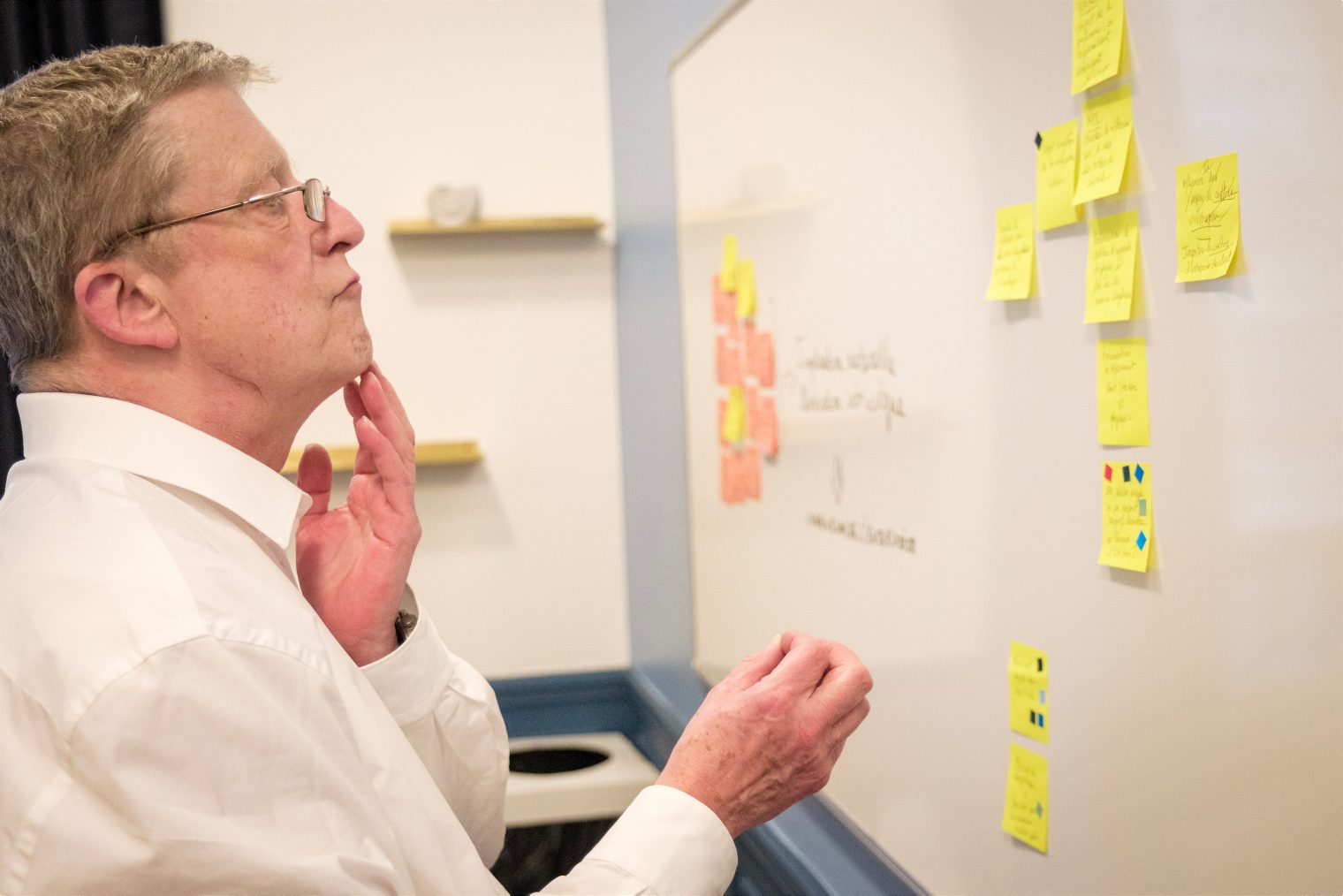
The planning wall takes shape

Frequently asked questions.

A question that finds no answer here is dealt with in a thirty-minute conversation, about your actual context rather than a general case.

Talk to an expert
Do you need to run projects well before putting portfolio management in place?

At a minimum you need sufficiently reliable data on projects, backlogs, workload and teams.

If that is not the case, we start at that level. We can structure backlog management practices, workflows, team capacity and project management before building the portfolio view.

Portfolio management does not fix unreliable operational data: it simply makes it more visible.

Do you need to use one of the tools you implement to work with BleuLemon?

No.

We work mainly with Jira, Jira Plans, Jira Align, OpenProject and TargetProcess, but we can equally work from your existing tooling.

Our starting point is always the processes, the governance and the decisions to be taken.

Why call on BleuLemon rather than implement a PPM tool directly?

Because a PPM tool does not create governance.

We work first on the practices: backlog management, roles, capacity, trade-off criteria, decision-making bodies and consolidation rules.

The tool then comes in to support that way of working.

Can you start with Jira or OpenProject before deploying a portfolio management tool?

Yes.

It is often the right starting point. Managing backlogs, teams, projects and dependencies consistently in Jira produces reliable operational data.

That data can then feed Jira Plans, Jira Align, TargetProcess or another portfolio platform when the need arises.

How do you define the trade-off criteria for a portfolio?

They depend on the organisation's strategy and context.

They may include expected value, regulatory obligations, risks, the capacity required, dependencies, costs, expected benefits or urgency.

What matters is that these criteria are defined before the trade-offs, and applied consistently enough to make decisions explainable.

How long does it take to put portfolio governance in place?

It depends on the quality of the existing data, the number of teams involved, the number of governance levels and the maturity of project practices.

We aim to produce a first usable view quickly rather than wait for everything to be perfect. The arrangement can then be enriched step by step.

What role does AI play in portfolio management?

AI can help detect inconsistencies, workload drift, risks or dependencies that are hard to spot in a large volume of data.

It can also help summarise information coming from projects and prepare committee meetings by bringing out significant variances.

It does not, however, decide which project should start, be delayed or be stopped. The trade-off remains a human decision, based on the organisation's strategy, capacity and priorities.


A project is not finished when it is delivered. It really begins when your teams make it their own.

BleuLemon, a French consultancy (Paris, Lyon) and Atlassian Platinum Solution Partner since 2008. 83% of our target clients retained over the last three years (internal data). More than 30 staff.

Going further: our services·The Assessment·FinOps and ITFM